Every map is a fresh puzzle
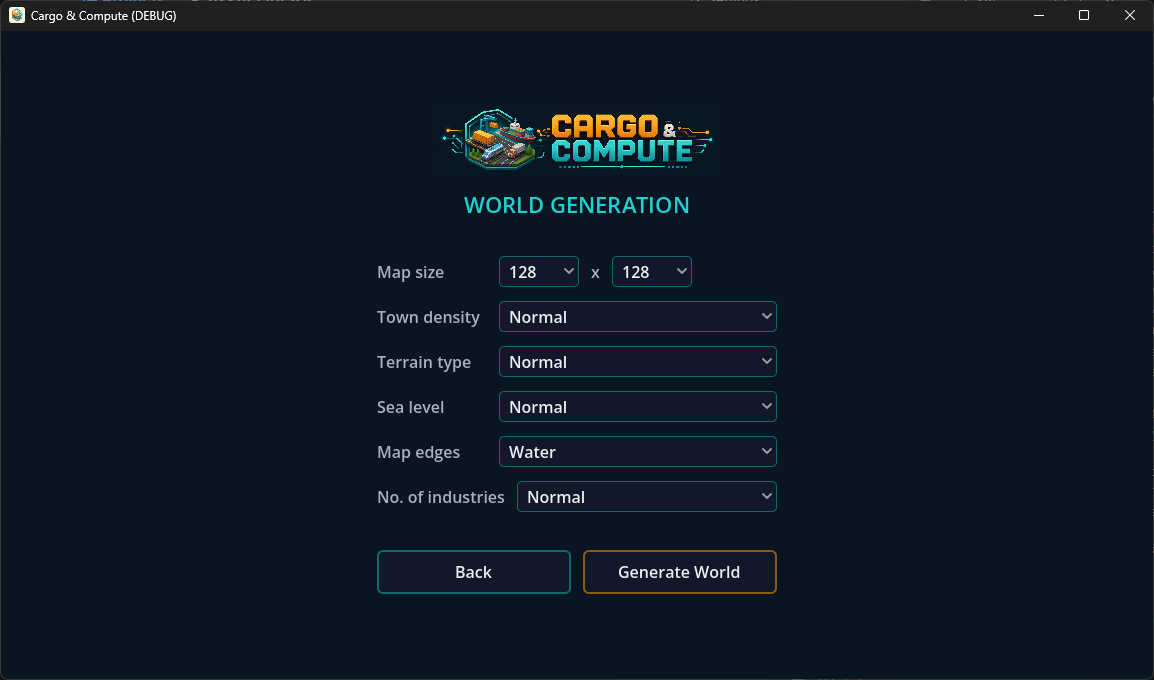
Mountains, coastlines, rivers and snowlines are generated new each time. The route that worked last game won't exist this one.
Start with one road between two sleepy towns. End with a sprawling network of trucks and trains carrying everything an economy needs - and the mountains, coastlines and rivers in between never make it easy.
Every map is generated fresh. Every line you lay has to earn its place on the terrain. Every town you connect starts pulling its own weight - and growing because of it.
No two maps play the same. The terrain decides where a road can climb and where a railway needs a tunnel, towns grow themselves into real places the longer you keep them fed, and a cargo economy with real depth rewards players who think a few steps ahead.
Mountains, coastlines, rivers and snowlines are generated new each time. The route that worked last game won't exist this one.
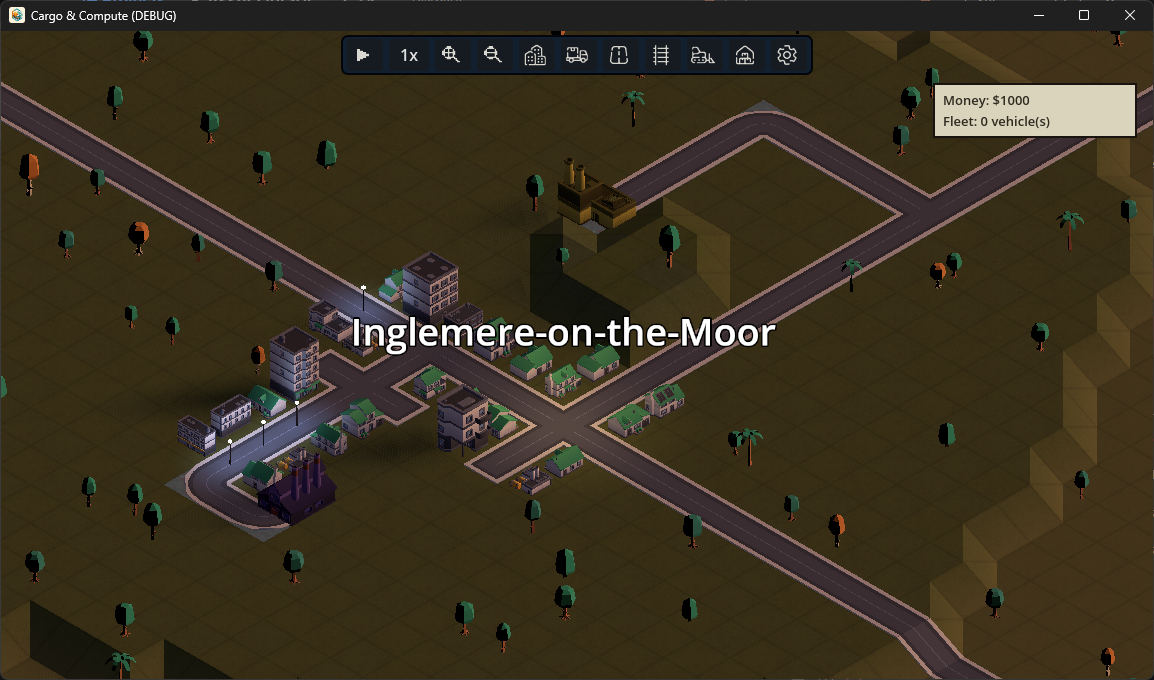
Keep a town supplied and it grows - new streets, new housing, new industry. Neglect it and it stays a backwater.
Raw materials feed processing, processing feeds high-value goods. The big money is always a few links further down the chain.
Roads get you started, but the rail network - junctions, signals, bridges, tunnels - is built entirely by hand, one decision at a time.
Link a town to its first industry, get vehicles moving, then keep stretching your network into places that looked impossible when you began.
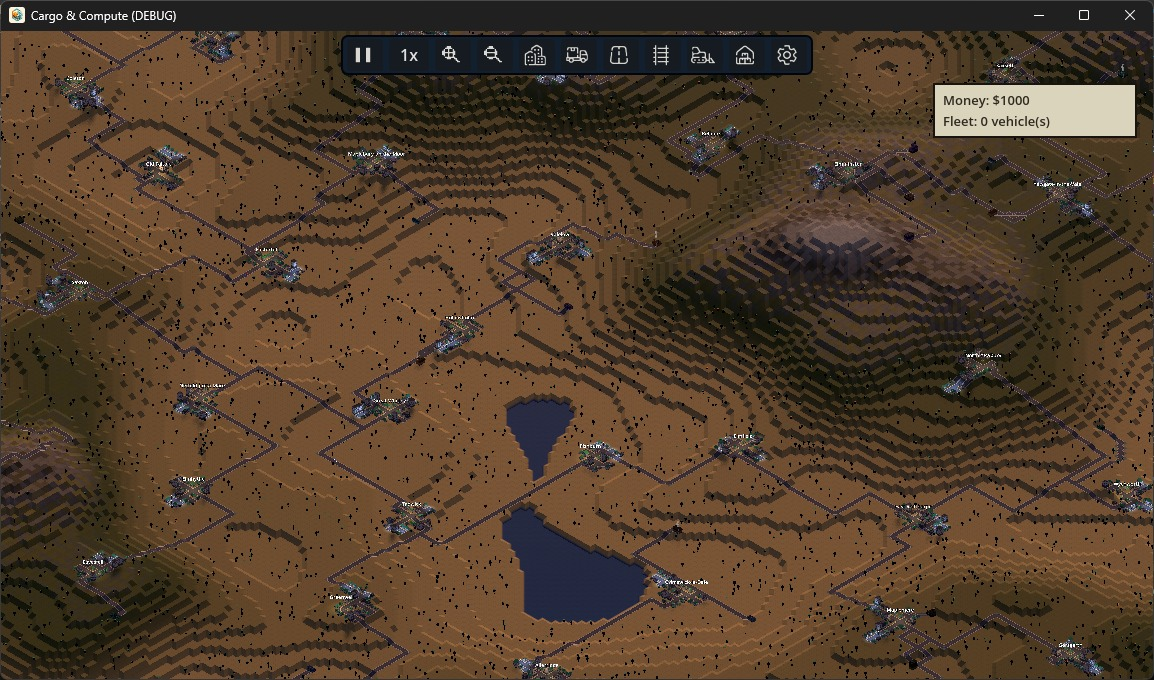
From broad valleys to snow-covered passes, every game begins with a different set of towns to serve, obstacles to solve and opportunities to turn into a transport empire.
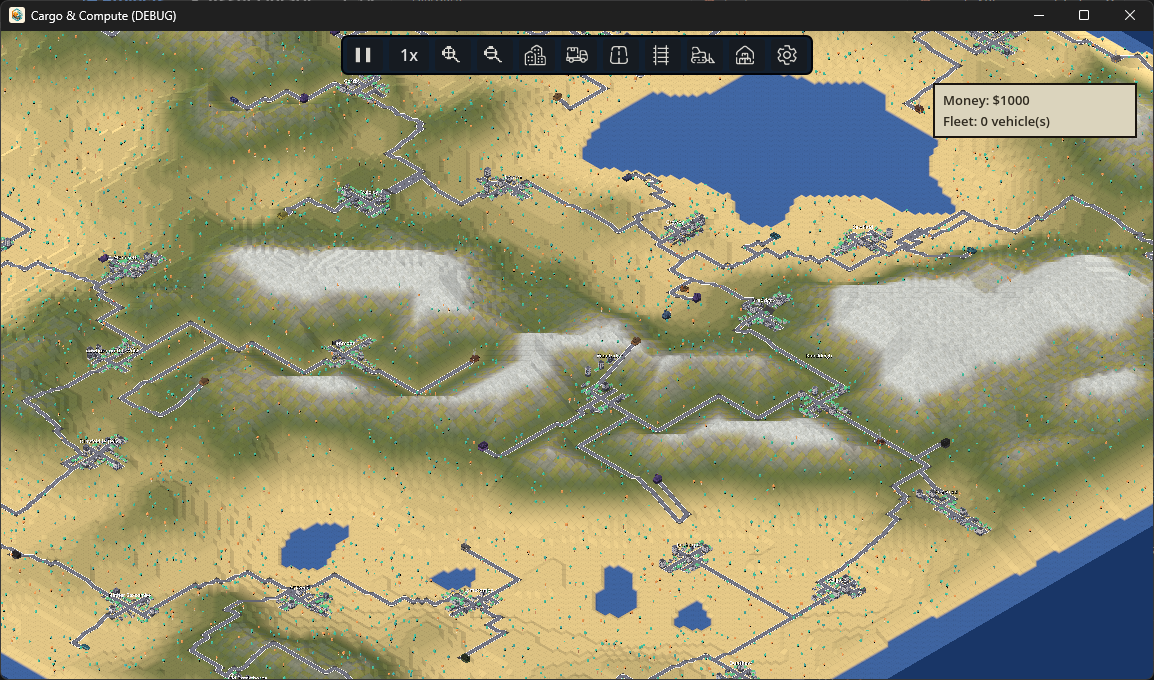
Cliffs, ridges and valleys aren't decoration - they decide where you can build, where you'll need a tunnel, and where a bridge is the only way through.
Dedicated tools for laying track on the X axis, the Y axis, or freeform - including true diagonal line - with a live preview that shows you exactly where it'll go before you commit.
A real signalling system - lines are split into blocks, and a train holds at red rather than ploughing into whatever's already on the track ahead.
Every town grows its own streets and plots organically over time - keep it fed and watch it turn from a hamlet into a sprawling town in its own right.
Primary goods, processed goods, high-value goods - the deeper the chain, the bigger the payoff, and the more it's worth protecting your supply.
Span a river or a ravine, or cut straight through a hillside - built with a simple two-click span rather than fiddly tile-by-tile placement.
Bulky raw materials feed processing, processing feeds high-value finished goods - the further up the chain, the better the money.
Keep a whole sector of industries supplied and reputation climbs with it, opening the door to bigger contracts and richer demand.
Real height and slope on every tile - if the ground's too steep, you're levelling it or routing around it. No free passes.
Road and rail are live now, each with their own network rules and vehicles. Water and air are built into the plan, not an afterthought.
The foundations - terrain, towns, the cargo economy, road and rail - are in and playable. From here it's about widening the network and sharpening everything around it.
Procedurally generated terrain, towns that grow themselves, and a multi-tier cargo economy. Done.
Hand-built road and rail networks, diagonal track, bridges, tunnels and block signalling. In progress.
Ports and cargo ships, airports and cargo planes - the network stops being limited to dry land.
Proper built stations, depots, ports and airports across every transport mode.
A full interface overhaul and a much wider roster of vehicles and cargo.
Get the whole loop in front of real players once every transport mode is live.
Out the door once the core loop is proven and worth putting your name on.